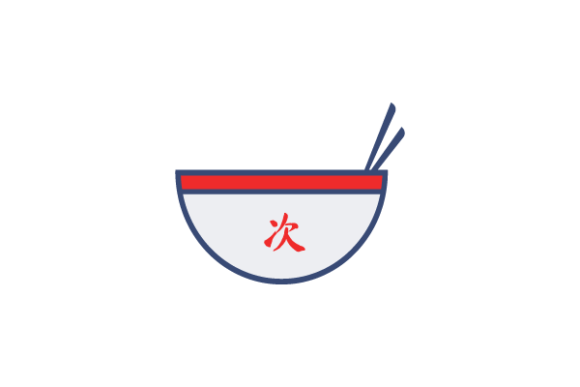
Chinese Food Icon (color) - 20: A Feast for Your Design Projects
You know that moment when a design feels almost complete, but it’s missing a certain spark? It has the right layout, the perfect color palette, and solid typography, yet it lacks that final layer of personality or cultural resonance. For anyone working on projects related to Asian cuisine, travel, cultural events, or even modern lifestyle brands, finding that perfect visual accent can be a challenge. This is where a resource like Chinese Food Icon (color) - 20 enters the conversation. It’s not just a random collection of graphics; it’s a curated set of twenty distinct, full-color illustrations designed to bring authentic and appetizing visual energy to a wide range of creative work.
Let’s look at what you’re actually getting. This is a premium design asset package, meaning it’s built for professional use. Each of the twenty illustrations is provided in a zipped file containing two crucial formats: a high-resolution PNG file and an EPS 10 file. The PNGs are ready to drop into presentations, social media posts, or web layouts with their transparent backgrounds, while the EPS files offer infinite scalability—essential for large-format print like banners or packaging. The quality is set at 300 DPI, which is the standard for sharp, professional printing, ensuring that what you design on screen translates perfectly to physical products. You won’t find any distracting watermarks in your final download, allowing for a clean integration into your work.
Visual Character and Real-World Application
The style of Chinese Food Icon (color) - 20 leans towards a modern, friendly, and slightly stylized aesthetic. Think of icons that capture the essence of a steaming dumpling, a pair of chopsticks, a fortune cookie, or a classic takeout box, but rendered with clean lines, appealing color fills, and just enough detail to be recognizable without becoming cluttered. This approach makes them incredibly versatile. They’re not overly cartoonish, which allows them to fit into more sophisticated brand identities, nor are they so minimal that they lose their cultural charm. They strike a balance that works for both playful and professional contexts.
So, where do these icons actually shine? Consider a food blogger designing a new header for their site focused on Asian recipes. Using one of these icons as a central motif instantly communicates the blog’s niche. For a small business owner launching a line of specialty sauces or noodles, these icons become invaluable for packaging design—appearing on labels, box art, or even as stamps for shipping boxes. Marketers can leverage them in social media graphics to promote a restaurant’s new menu or a cooking class, adding visual interest that stops the scroll. In editorial design, such as a magazine feature on street food or a travel guide, these icons can serve as elegant section breaks or sidebar illustrations, enhancing the reader’s experience without overwhelming the text. The key is that they function as more than decoration; they become part of the visual storytelling.
Integrating Icons into Your Brand and Design Strategy
Using a set of icons like this effectively goes beyond simply inserting a pretty picture. It’s about making a strategic choice that influences how your audience perceives your project. Consistency is paramount. When you use the same icon set across your website, your social media graphics, your printed menus, and your merchandise, you build a cohesive visual language. This repetition fosters recognition and professionalism. A customer who sees the same stylized dumpling icon on your Instagram post and then on your physical product packaging will subconsciously connect those touchpoints, strengthening your brand identity.
From a practical standpoint, integrating these assets is straightforward. The PNG files are perfect for digital use—simply import them into your design software like Canva, Adobe Photoshop, or Illustrator. For print projects or when you need to adjust colors, the EPS vector files are your best friend. You can scale them to any size without loss of quality, change their colors to match your exact brand palette, or even isolate parts of an icon to create custom motifs. This level of control is what separates a generic clip-art look from a tailored, professional design.
When choosing how to use Chinese Food Icon (color) - 20, always test them within the context of your existing design. Place them next to your primary typography. Do they clash with your chosen serif font or complement your sans serif font? The icons should enhance your layout, not fight with it. They work exceptionally well as supporting elements, perhaps used as bullet points in a menu, as decorative elements in a presentation slide, or as part of a logo lockup for a food-related venture. Their strength lies in their ability to add a layer of thematic clarity and visual appeal that stock photos often cannot match.
Ultimately, a resource like this is about saving time and elevating quality. Instead of commissioning custom illustrations or spending hours creating your own, you have a library of ready-to-use, high-quality assets. This allows you, whether you’re a designer on a tight deadline, an entrepreneur building a brand from the ground up, or a content creator looking to enrich your posts, to focus more on the big-picture strategy and less on the nitty-gritty of asset creation. The result is work that feels more polished, more intentional, and more connected to its subject matter. It’s a practical tool for anyone looking to add a dash of authentic flavor to their creative projects.